
Exploring the world of spa interior design, this article delves into the essential elements that contribute to a soothing and tranquil spa atmosphere. From lighting to textures, discover how every detail plays a crucial role in enhancing the overall spa experience.
Layout, materials, and technology integration are also key aspects that will be explored in detail, providing valuable insights for creating a harmonious and inviting spa environment.
Elements of Spa Interior Design
Creating a calming and serene spa environment involves several key elements that contribute to the overall ambiance and enhance the spa experience.
Lighting
Lighting plays a crucial role in setting the mood and ambiance of a spa. Soft, warm lighting can create a relaxing atmosphere, while natural light can bring in a sense of openness and tranquility.
Color Schemes
The choice of colors in a spa interior design is important for creating a peaceful environment. Soft, neutral tones like pastels or earthy shades are often used to promote relaxation and rejuvenation.
Natural Elements
Incorporating natural elements such as plants, water features, and natural materials like wood and stone can help bring the outdoors inside, creating a connection to nature and a sense of harmony.
Comfortable Furniture and Decor
Comfortable seating, plush towels, and soothing decor elements like candles and artwork are essential to create a cozy and inviting space where guests can unwind and feel at ease.
Textures, Scents, and Sounds
Textures like soft fabrics, soothing scents from essential oils or candles, and calming sounds like gentle music or trickling water can further enhance the sensory experience and promote relaxation during spa treatments.
Layout and Space Planning
When designing the layout of a spa, it is crucial to consider factors such as the flow of movement, privacy, and functionality to create a relaxing and efficient space.
Optimal Layout for a Spa
The optimal layout for a spa should prioritize creating a seamless flow of movement for both guests and staff. This can be achieved by strategically placing treatment rooms, relaxation areas, reception, and support facilities in a way that ensures easy navigation.
Privacy should also be taken into consideration when designing the layout to provide a sense of tranquility for guests during their spa experience.
Significance of Allocating Space
Allocating space for treatment rooms is essential to provide guests with a private and serene environment for their spa treatments. Relaxation areas offer guests a space to unwind before or after their treatments, enhancing the overall spa experience. The reception area serves as the first point of contact for guests and should be welcoming and efficient.
Support facilities, such as storage rooms and staff areas, are necessary to ensure the smooth operation of the spa.
Zoning Areas within a Spa
Zoning different areas within a spa can help create a harmonious and efficient space by separating noisy or high-traffic areas from quiet and serene spaces. For example, placing treatment rooms away from the reception area can minimize disruptions for guests during their treatments.
Creating distinct zones for relaxation, therapy, and support facilities can enhance the overall guest experience and improve workflow for staff.
Maximizing Space in a Spa Setting
To maximize space in a spa setting, consider incorporating multifunctional furniture that can serve dual purposes, such as storage benches or movable partitions. Utilize vertical space for storage and decor to free up floor space. Additionally, implementing a neutral color palette and strategic lighting can create an illusion of space and enhance the overall ambiance of the spa.
Materials and Finishes
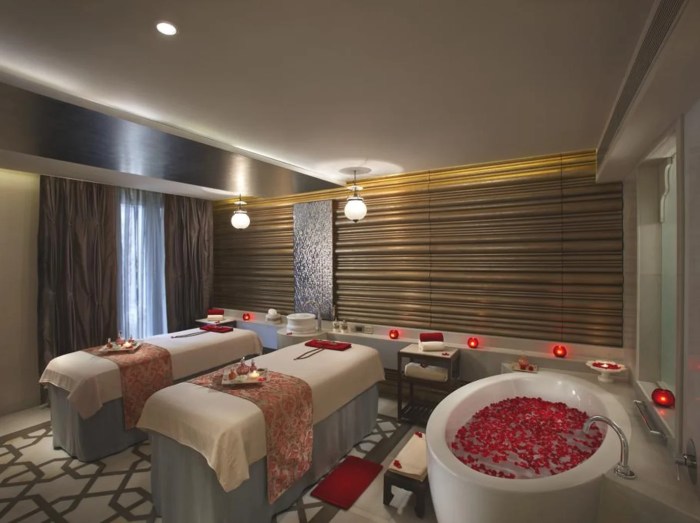
When it comes to spa interior design, the choice of materials and finishes plays a crucial role in creating a relaxing and inviting atmosphere for guests. Let's explore the common materials used in spa interiors and their benefits.
Common Materials and Finishes Used in Spa Interiors
- Wood: Wood is a popular choice for spa interiors due to its warm and natural look. It can create a sense of tranquility and relaxation.
- Stone: Stone materials like marble or granite are often used in spas for their luxurious and elegant appearance. They also add a touch of sophistication to the space.
- Bamboo: Bamboo is a sustainable material that is eco-friendly and adds a touch of Zen to spa interiors. It is known for its durability and natural beauty.
- Synthetic Materials: Synthetic materials like vinyl or laminate are often used in spa interiors for their durability and ease of maintenance. They can mimic the look of natural materials at a lower cost.
Comparison of Natural and Synthetic Materials
While natural materials like wood, stone, and bamboo can create a more organic and calming environment, synthetic materials offer practicality and cost-effectiveness. The choice between natural and synthetic materials ultimately depends on the desired aesthetic and budget of the spa.
Impact of Sustainable Materials on Spa Interior Design
Using sustainable and eco-friendly materials in spa interiors not only helps reduce the environmental impact but also appeals to eco-conscious customers. Materials like bamboo, cork, or reclaimed wood can add a unique touch to the spa design while promoting sustainability.
Effect of Different Finishes on Spa Environment
- Matte Finishes: Matte finishes create a soft and understated look in a spa, promoting a sense of calmness and relaxation.
- Glossy Finishes: Glossy finishes can add a touch of luxury and sophistication to a spa interior, reflecting light and creating a more vibrant atmosphere.
- Textured Finishes: Textured finishes like stone or rough wood can add depth and tactile interest to the space, enhancing the overall sensory experience for guests.
Technology Integration
In modern spa interior design, technology plays a crucial role in enhancing the overall guest experience while maintaining a relaxing atmosphere. From automated systems to mood lighting and sound systems, integrating technology thoughtfully can elevate the spa environment to new heights.
Automated Systems
Automated systems in spa interiors can streamline operations and create a more seamless experience for guests. For example, automated lighting and temperature control can be adjusted to create the perfect ambiance for different treatments. Additionally, automated booking systems can simplify the reservation process for both guests and staff.
Mood Lighting and Sound Systems
Mood lighting and sound systems are essential elements in creating a tranquil atmosphere within a spa. Advanced lighting systems can be programmed to adjust according to the time of day or specific treatments, while sound systems can play soothing music or nature sounds to enhance relaxation.
By integrating these technologies discreetly, spa designers can create a sensory experience that complements the overall design.
Digital Interfaces and Interactive Elements
Digital interfaces and interactive elements can engage guests and enhance their overall spa experience. For example, interactive touchscreens can provide information about treatments and products, while digital interfaces in relaxation areas can offer guided meditation sessions or virtual reality experiences.
These elements not only add a modern touch to the spa but also cater to the diverse preferences of guests.
Examples of Innovative Technological Solutions
Innovative technological solutions that have been successfully implemented in spa interiors include hydrotherapy tubs with built-in light and sound therapy, virtual reality meditation pods, and personalized treatment recommendations based on guest preferences and skin analysis. These technologies not only differentiate spas from competitors but also create memorable experiences for guests, making them more likely to return in the future.
Final Summary
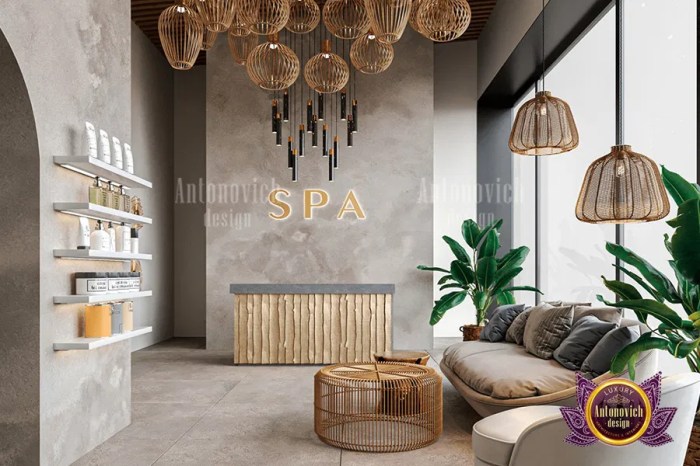
In conclusion, designing a spa interior involves a delicate balance of aesthetics, functionality, and comfort. By carefully considering all aspects from layout to technology integration, one can create a truly immersive and rejuvenating spa space that leaves a lasting impression on guests.
Top FAQs
What are some key elements for creating a calming spa environment?
Key elements include lighting, color schemes, natural elements, comfortable furniture, textures, scents, and sounds.
How important is space planning in spa interior design?
Space planning is crucial for ensuring a harmonious and efficient spa layout, considering factors like flow of movement, privacy, and functionality.
What materials are commonly used in spa interiors?
Common materials include wood, stone, bamboo, and synthetic materials, each offering unique benefits for spa design.
How can technology be integrated into spa interior design without compromising the relaxing atmosphere?
Technology can be seamlessly integrated through automated systems, mood lighting, sound systems, digital interfaces, and interactive elements, enhancing the guest experience without disrupting the spa ambiance.